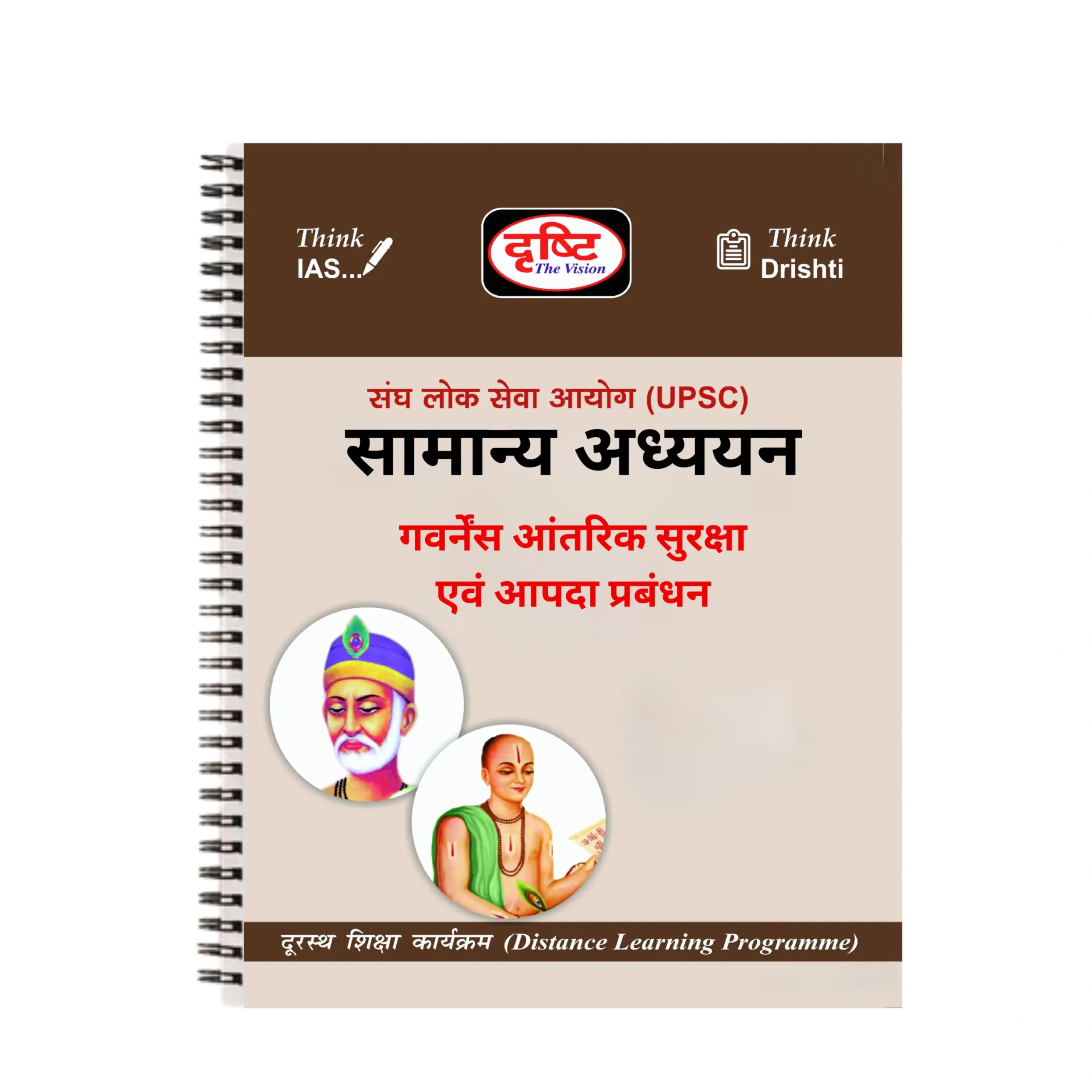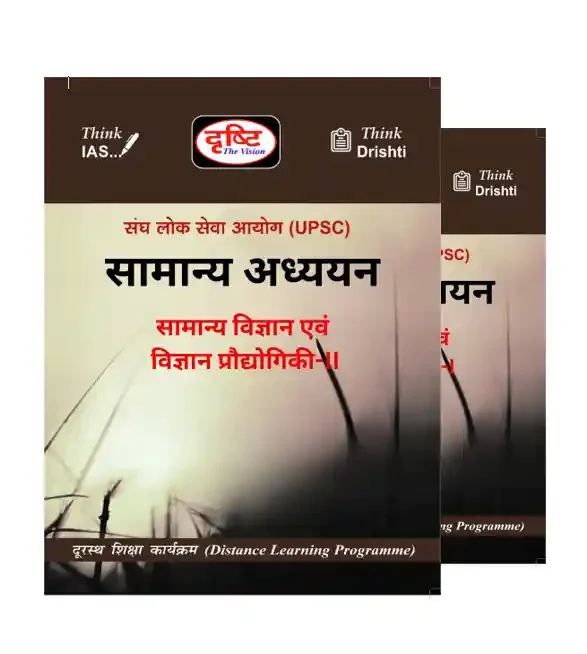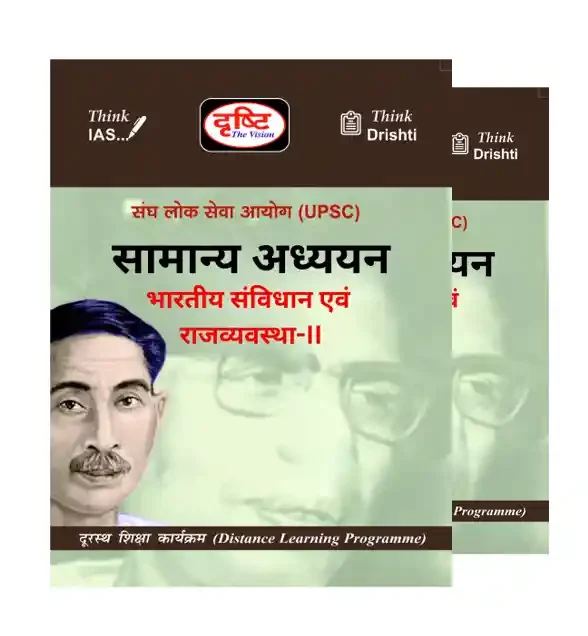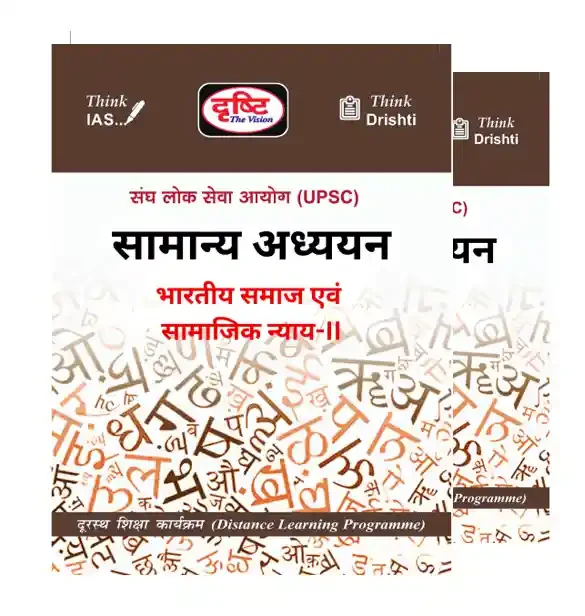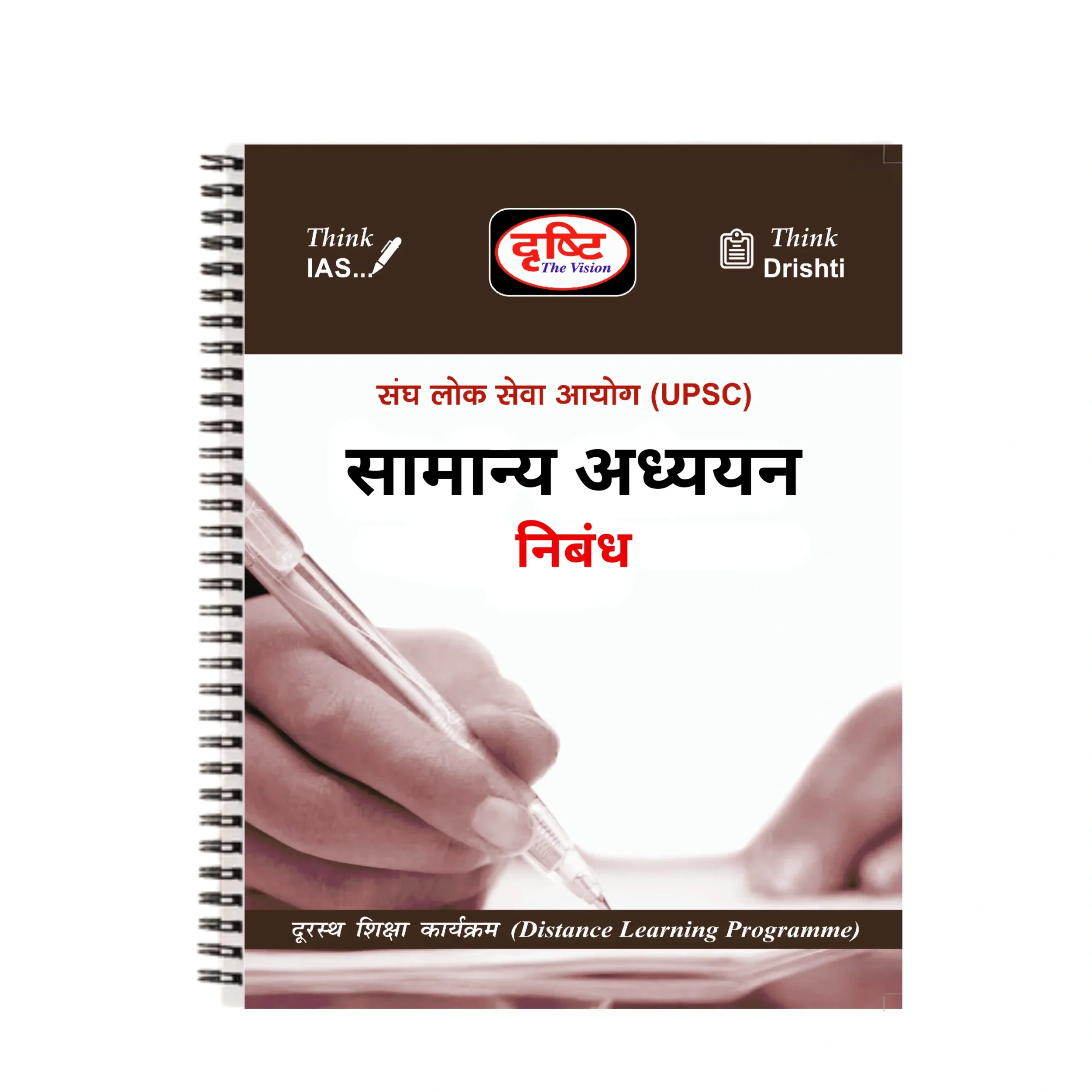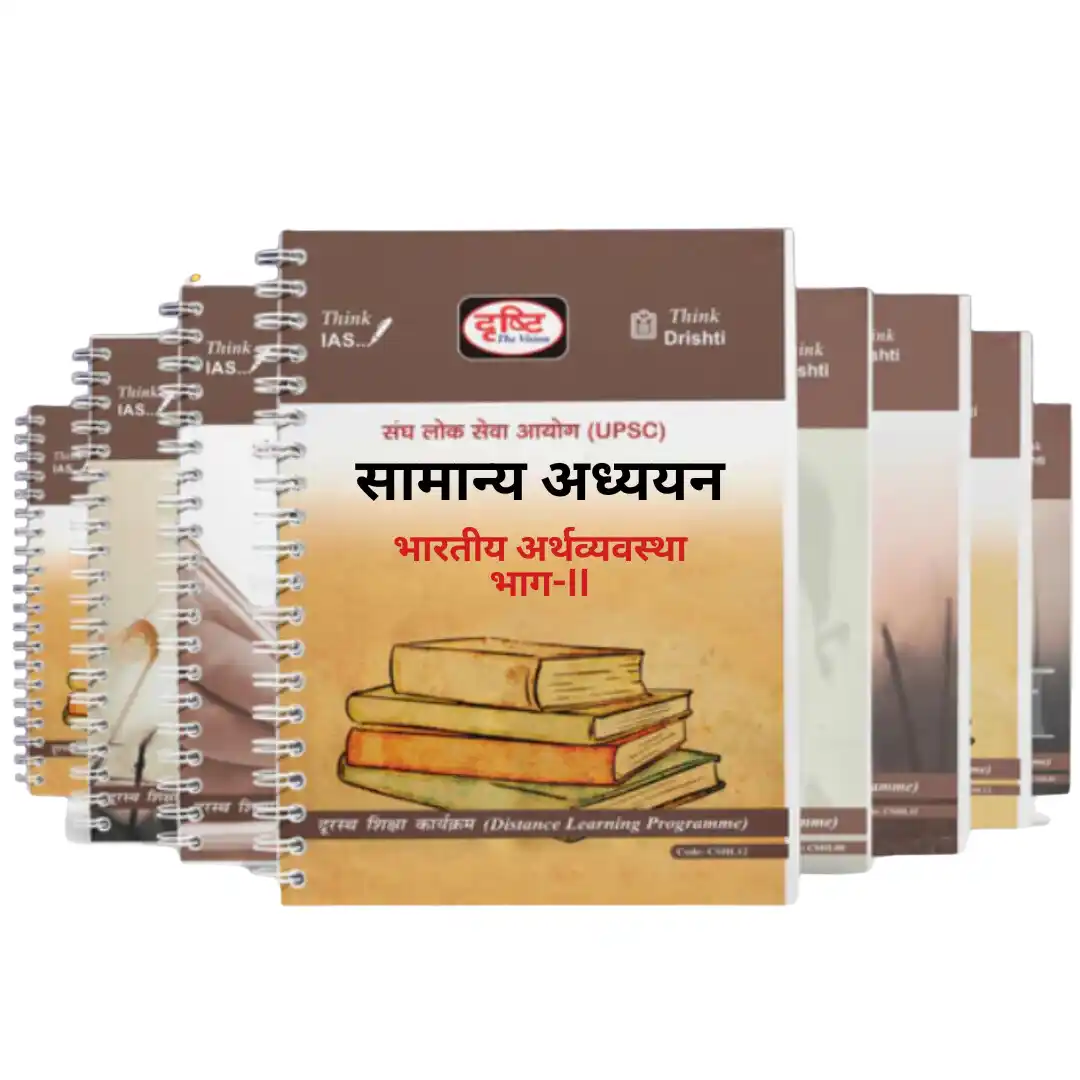

Drishti IAS Essay Hindi Notes for UPSC 2025-26: The Ultimate Content Enrichment & Strategy Series (Full GS Study Material)
Product Overview
| Feature Specification | Product Details |
|---|---|
| Booklets Count | 4 Comprehensive Modules (Complete Set) |
| Language | Hindi (Standard Academic/Official Hindi) |
| Publisher | Drishti IAS (Notes Division) |
| Condition | Brand New (Latest 2025-26 Edition) |
| Format | High-Quality Printed Booklets / Spiral Bound Softcover |
| Examination Targeted | UPSC Civil Services Mains (Paper-I) & State PCS |
Complete Booklet Catalog
This study material is meticulously organized into four distinct modules, designed to take a candidate from the foundational basics of linguistic expression to the advanced complexities of philosophical interpretation. The catalog includes:
- Booklet 1: Fundamental Principles of Essay Writing (Nibandh Lekhan ki Adharbhut Sanrachna).
- Booklet 2: Decoding Philosophical and Abstract Themes (Darshanik evam Amurt Vishay).
- Booklet 3: Socio-Economic and Political Thematic Essays (Samajik, Arthik evam Rajneetik Mudde).
- Booklet 4: Model Essays & Previous Year Solved Papers (Pradarsh Nibandh evam Pichle Varshon ka Hal).
Deep Dive: Booklet 1 - The Structural Foundations
Booklet 1 is the cornerstone of the Drishti IAS Essay program. It does not merely list topics but provides a technical blueprint for the Essay paper. The internal index is divided into seven major segments, each focusing on the mechanics of the UPSC Mains Paper I. The booklet starts with an "Orientation to the UPSC Syllabus," providing a granular breakdown of what the Commission expects in terms of "concise expression" and "effective arrangement."
Chapter 2 of this booklet focuses on "Topic Selection Strategy." It includes a unique decision-making matrix used by Drishti IAS experts to help students choose between two options in each section (Section A and Section B). The booklet highlights the "Internal Brainstorming Method," where the text explains how to use the last few pages of the answer booklet for rough work, including mind maps and chronological flowcharts.
The third chapter deals exclusively with the "Introduction (Prastavana)." It offers over 15 different techniques to start an essay, including the anecdotal method, the statistical start, the provocative question approach, and the "historical context" beginning. Each technique is accompanied by three physical examples printed in side-by-side columns to show the difference between an average introduction and an "Elite" Drishti-standard introduction.
The final section of Booklet 1 covers the "Body and Conclusion." It details the "Pestel Approach" (Political, Economic, Social, Technological, Environmental, Legal) and how to weave these dimensions without making the essay look like a General Studies answer. The physical layout of these pages includes wide margins, specifically designed for students to add their own quotes or contemporary examples from newspapers like 'Dainik Jagran (National Edition)' or 'The Hindu'.
Deep Dive: Booklet 2 - Mastering Philosophical Themes
As the trend of the UPSC CSE Mains has shifted heavily toward abstract and philosophical quotes, Booklet 2 is arguably the most critical component for the 2025-26 cycle. This booklet is structured into three primary thematic blocks. The first block covers "Ethics and Human Values." Here, the internal content explores quotes from Socrates, Plato, Aristotle, and Indian thinkers like Mahatma Gandhi, Swami Vivekananda, and B.R. Ambedkar.
The second block focuses on "Epistemology and Logic in Essays." It includes specialized sections on how to interpret quotes such as "The ship in the harbor is safe, but that is not what ships are built for." The booklet provides a step-by-step decoding guide for these abstract topics, teaching the student how to expand a single sentence into a multi-dimensional 1200-word essay. The internal pages feature "Thought-Linkage Boxes," which are unique graphical representations showing how to connect a philosophical quote to contemporary governance, technology, and individual psychology.
The third block contains "Keywords and Glossary." This section is a goldmine for Hindi medium students who struggle with finding sophisticated vocabulary (Shabdavali). It lists approximately 500 high-level Hindi terms with their meanings and usage examples, ensuring that the student's language sounds authoritative and scholarly. This booklet is printed with a slightly different internal layout, utilizing "Key Highlight Boxes" that summarize the core philosophy of each chapter at the bottom of the page.
Deep Dive: Booklet 3 - Socio-Economic and Static Themes
Booklet 3 is the "Information Engine" of the set. While Booklets 1 and 2 focus on style and logic, Booklet 3 provides the hard data and thematic content required for Section B of the UPSC Paper. The booklet is divided into 12 thematic chapters, including:
- Women Empowerment: Historical trajectory, legal reforms, and the "Glass Ceiling" in the Indian corporate and political context.
- Education and Health: Issues of accessibility, the New Education Policy 2020, and the digital divide in rural India.
- Science and Religion: The eternal conflict and synthesis, Artificial Intelligence (AI) ethics, and the role of tradition in a modern scientific temper.
- Environment and Sustainability: Climate change, India's Panchamrit goals, and the relationship between development and ecological preservation.
Deep Dive: Booklet 4 - The Practice & Solution Manual
The final booklet is a massive compilation of "Model Essays and Solved Papers." It contains fully written essays for every UPSC Mains topic from 2013 to 2024. These are not just summaries; they are full-length, 1000-1200 word essays written in the "Perfect Score" format. Each solved paper is followed by an "Examiner’s Viewpoint" section, which explains why a particular structure was chosen for that specific topic.
Beyond the previous years, Booklet 4 contains 50 "Predictive Model Essays" for the 2025 and 2026 examinations. These topics are curated based on emerging global trends, such as the Geopolitics of the Global South, the Ethics of Generative AI, and the New Global Financial Architecture. The booklet also features a "Quote Repository" (Ukti-Sangrah). This is a 40-page section categorized by theme (e.g., Courage, Democracy, Youth, Environment) where the most impactful poems, Sanskrit shlokas, and Urdu couplets are provided to enhance the aesthetic value of the essay.
Physical Specifications & Print Quality
The Drishti IAS Essay Hindi Notes are produced with a focus on long-term durability and reading comfort, recognizing that a UPSC aspirant spends 8-10 hours daily with these materials. The physical attributes are as follows:
- Paper Quality: Every booklet is printed on premium 75 GSM (Grams per Square Meter) natural shade paper. This specific weight ensures that there is zero ink bleed-through when using highlighters or gel pens for note-taking. The "natural shade" or off-white tone is chosen to reduce eye strain (anti-glare) during late-night study sessions.
- Ink and Print Resolution: We utilize high-contrast, deep-black laser printing. The font used is a custom-designed, serif-based Hindi typeface that is exceptionally clear, with a font size of 11.5pt for body text and 14pt for headings. This ensures maximum readability for students with varying eyesight.
- Binding: The set comes in two options: Reinforced Spiral Binding or Perfect Thermal Binding. The spiral binding is heavy-duty, allowing the booklet to lay 180 degrees flat on a desk, which is essential for students who like to map out diagrams or copy quotes while keeping the book open.
- Cover Page: Each booklet features a 300 GSM laminated cardstock cover. The lamination is water-resistant and matte-finished, preventing fingerprints and protecting the material from accidental spills.
- Dimensions: Standard A4 size, optimized for portability and fitting perfectly into standard study bags or desk organizers.
Internal Layout & Special "Drishti/Vision" Features
Inside these booklets, the content is not just walls of text. It is "instructionally designed" for the UPSC brain. Several proprietary features include:
- The "Brainstorming Map": At the start of every chapter, a circular mind map shows the various dimensions of that topic. For example, the topic "Globalization" will have branches pointing to Culture, Economy, Sovereignty, and Identity.
- Keyword Highlighting: Critical Hindi terminologies like 'Sarvabhaumikta' (Universality) or 'Pragatisheel' (Progressive) are bolded throughout the text to help the student build a "technical vocabulary" for the essay paper.
- The "Counter-Argument Box": In every socio-political essay, a dedicated box provides the opposing view, teaching the student how to maintain a balanced (Nishpaksh) approach, which is a key grading criterion in the UPSC.
- Marginalia Space: A 2-inch blank margin on the outer edge of every page is provided. This is designed for "Current Affairs Tagging," where students can write down news headlines that relate to the static content on that page.
Packaging & Shipping Excellence
We understand that these notes are a vital investment for your career. Our packaging process involves three layers of protection. First, the booklet set is shrink-wrapped in moisture-proof plastic. Second, it is placed in a corrugated cardboard box to prevent corner damage during transit. Finally, the box is sealed with tamper-evident tape. We partner with premium logistics providers like BlueDart, Delhivery, and India Post (Speed Post) to ensure delivery to the remotest parts of India within 3-7 business days.
Frequently Asked Questions (FAQ)
1. Are these notes updated for the 2025-26 UPSC cycle?
Yes, this is the latest edition. It includes content reflections on the 2023 and 2024 Mains papers, including the recent shift toward more philosophical and quote-based essays in Section A and B.
2. Is the language of these notes purely Hindi or Hinglish?
These notes are written in formal, standard Hindi (Shuddh Hindi) as required by the UPSC. However, for complex technical terms, the English equivalent is often provided in brackets to ensure clarity for students coming from a bilingual background.
3. How does this material differ from the standard GS Paper 1-4 notes?
General Studies notes are fact-heavy and objective. These Essay notes are "expression-heavy." They focus on how to build a narrative, how to argue logically, and how to maintain a flow (Pravah) between paragraphs, which GS notes do not cover.
4. Can these notes be used for State PCS exams like UPPCS, BPSC, or MPPSC?
Absolutely. The essay writing techniques and the thematic content (Women, Education, Environment) are universal. For BPSC specifically, the sections on philosophical quotes are highly relevant given their recent syllabus changes.
5. Do these booklets include a list of important quotes (Uktiyan)?
Yes, Booklet 4 contains a dedicated 40-page section of quotes, poems, and Sanskrit shlokas categorized by theme, specifically curated for the Hindi medium aspirant.
6. What is the paper quality? Will the ink from my highlighter bleed through?
We use high-grade 75 GSM paper. It is thick enough to withstand heavy highlighting and pen pressure without any ghosting or bleeding on the reverse side.
7. Are these original Drishti IAS materials?
This is the printed version of the class notes and study material provided by the Drishti IAS Notes Division. It reflects the teaching style and methodology of Dr. Vikas Divyakirti and his team of experts.
8. Does the material cover the 'philosophical essay' trend?
Yes, Booklet 2 is entirely dedicated to philosophical and abstract themes, providing a specialized framework to tackle topics that don't have a direct GS source.
9. How much time does it take to finish this entire set?
For a dedicated student, the fundamental strategies (Booklet 1) take about a week. The thematic content and practice (Booklets 2-4) are usually integrated into a 3-month preparation cycle alongside GS papers.
10. Is there a replacement policy for damaged books?
Yes, if you receive a set with printing errors, missing pages, or transit damage, we offer a 7-day hassle-free replacement. Please ensure you record an unboxing video as proof of damage.
11. How do I use the marginal space effectively?
The 2-inch margins are designed for "dynamic updates." We recommend that whenever you read a relevant editorial in the newspaper, you jot down a 1-line summary or a new statistic next to the related topic in Booklet 3.
12. Is shipping free to rural areas?
We offer competitive shipping rates across India. Most major orders for the full set include discounted or free shipping, depending on the current promotional offer at the time of checkout. We use Speed Post for the most remote pin codes.